Jon Mick · guest kit for podcast and newsletter hosts US Central time · book by Substack message
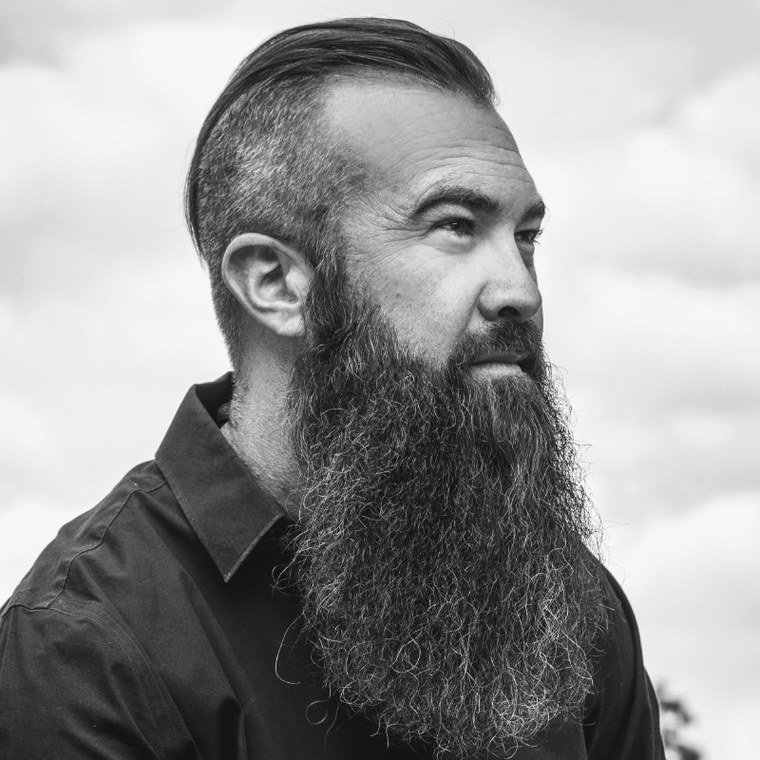
Jon Mick, black and white side profile

My twice-exceptional mind thinks in constellations. AI is how I translate it for everyone else.

Everything you need to book and introduce me: an intro you can read as written, bios at three lengths, topics with sample questions, past episodes and a headshot.

01 An intro to read aloud

02 Bios, for show notes

One line

Jon Mick is a twice-exceptional product leader who built a personal AI system for his own constellation mind, and writes about it in his Substack, AI Gave Me Autism.

Short · about 50 words

Jon Mick is a twice-exceptional product leader who spent fifteen years building software for companies like The Home Depot and General Motors, then turned the same skills on his own ADHD and autistic mind. He thinks in constellations, built jonmick.ai to hold the details his mind drops, and writes AI Gave Me Autism.

Full · about 100 words

Jon Mick is a twice-exceptional product leader from Austin, Texas. For fifteen years he led product at companies including General Motors, The Home Depot and Keller Williams, making complex systems legible for the people who use them. Then he turned that method on his own ADHD and autistic mind. He wrote up a theory of how it works, called working memory fragility, and built jonmick.ai, a personal AI system that holds the details his mind drops. He thinks in constellations, and much of his work is translating them for minds that work differently. He writes the Substack AI Gave Me Autism and founded AIs & Shine.

03 What we can talk about

A theory of my own mind

Topic 1

My thoughts arrive faster than my mind can settle them, so a new one can push out the last before it has set. I call it working memory fragility. I wrote it up as a theory, then built the system the theory said I needed.

  1. aWhat does that feel like from the inside on an ordinary day?
  2. bWhy write a theory of your own mind instead of reading one?
  3. cWhat changed once you had a name for it?

Ghost or prosthetic

Topic 2

A detector cannot tell a ghost from a prosthetic. When a person speaks through a device, the words are still theirs, and for a lot of neurodivergent writers AI is closer to the device than to the ghost.

  1. aWhere is the line between help and ghostwriting?
  2. bWhat do AI detectors get wrong about disabled and neurodivergent writers?
  3. cWhat would a fair test look like?

A translator between two minds

Topic 3

Much of my day goes to translating for brains that work differently from mine. In my marriage, AI helps me see how the same moment looked from my wife Charlotte's side.

  1. aWhat does all that translating cost you on a normal day?
  2. bHow do you use AI in a relationship without handing it the relationship?
  3. cWhat did it show you that you couldn't see on your own?

Building products for everyone but me

Topic 4

For fifteen years I led product at companies like The Home Depot and General Motors, making complex systems legible for other people. Then I ran the same method on my own mind.

  1. aWhat did product management teach you about your own brain?
  2. bWhat did you build first, and what didn't work?
  3. cWhat would you tell a team building tools for neurodivergent people?

04 Past episodes

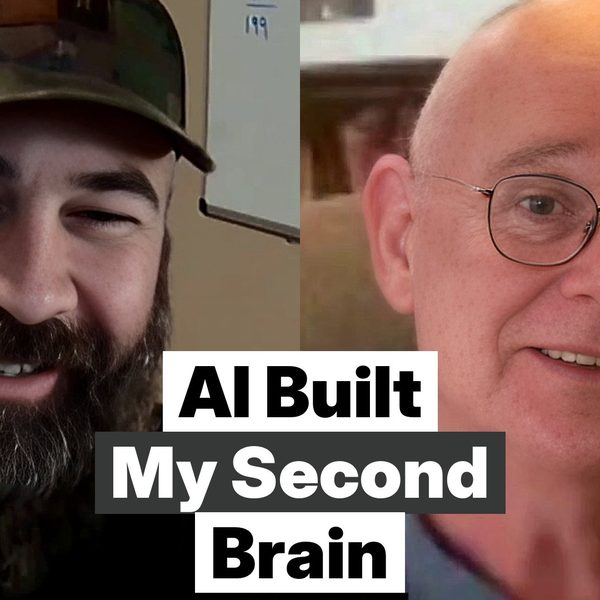
Airing soon Conversations About Autism with Sam Loprete · HumanPrint with Christine Whitmarsh
A second guest, if you want one On AI and Autism, Bre also interviewed my AI by phone. It answers at 1-928-706-9386 and will talk about my work in the third person.

05 How I work best as a guest

I have what I call a constellation mind. Ideas arrive as connected networks rather than in a line, so one question lights up three others, and my answer is usually about how they connect. I also loop back: something from minute five tends to return at minute forty, joined to something new. That makes me a poor fit for a list of rehearsed questions and a good fit for a real conversation. Live back-and-forth is where I think fastest.

  1. aBring a topic, then follow the thread. One opening question is plenty. A tangent we both care about makes better listening than question seven on a list.
  2. bThe tangents are the engine. If I jump a few topics in a few minutes, I'm having a good time. Pull me back whenever you like; a plain "back to the theory" works and never offends me.
  3. cConstellation minds make the best episodes. If you think in connections too, we'll build on each other's ideas, and listeners get to overhear two people thinking out loud.
  4. dAsk for the short version. When a topic catches me I'll give you the whole map. "Say that in one sentence" helps me; it isn't an interruption.
  5. eQuestions ahead are a map, not a script. Send them if your show works that way. I won't rehearse answers to them, and two days' notice is all I need.
  6. fPut the details in writing. Before we hang up I'll ask when it airs and how you'd like it shared. Send that in a message too; it's exactly the kind of detail my working memory drops.
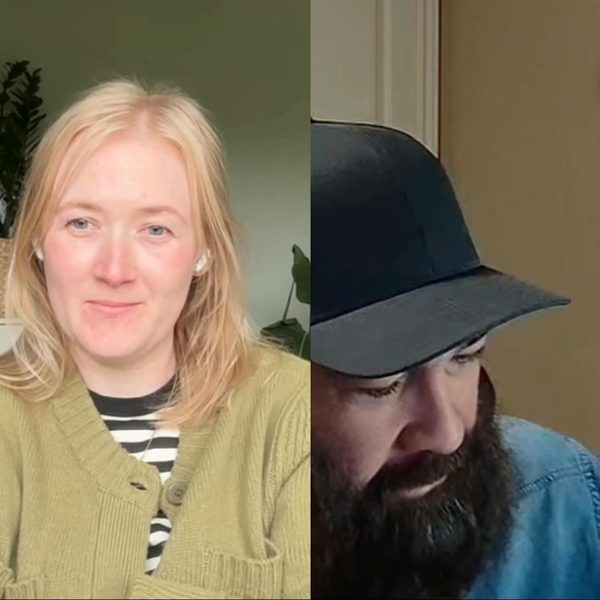
The longer version Working With Jon Mick a field guide my AI wrote Why I Left Facebook (And Why I'm Back With a Link) Jan 31, 2026

06 Logistics

Time zone
US Central (Austin, Texas)
Audio
From my desk, or on a ruck
Video
Razer Kiyo Pro webcam
Lead time
Two days
Headshot
Square, 760 × 760 px
Booking
A message on Substack

I think most clearly outdoors on a ruck, so an audio-only episode can come from the trail.

07 Book me, and where to send listeners

Message me on Substack with your show, a date or two, and the angle you have in mind. If listeners want more after the episode, send them to my newsletter, AI Gave Me Autism, or to jonmick.ai, the system the episode was probably about.