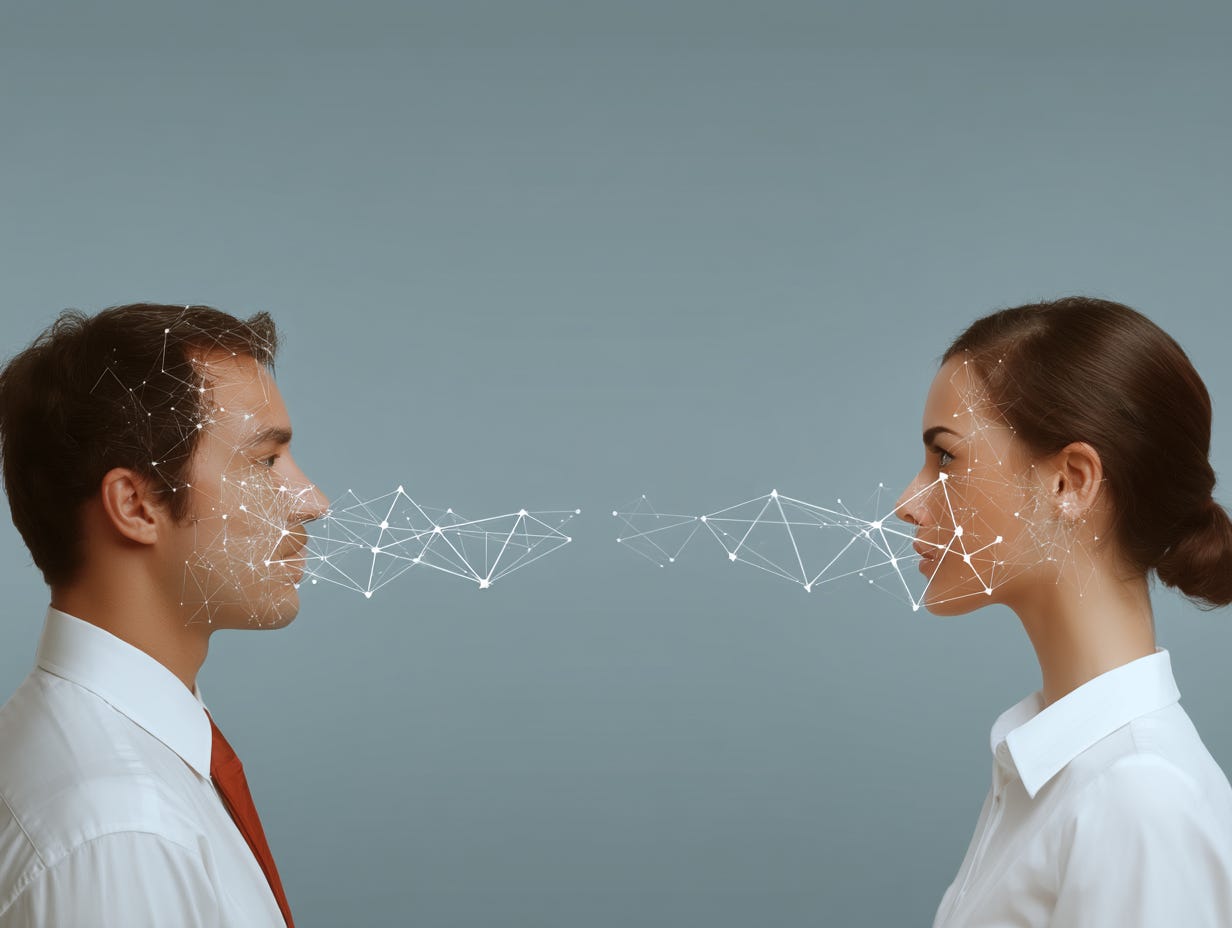
TL;DR: We've explored using AI to translate perspectives between partners; now, what if it could actively coach us through tricky conversations before they happen? This piece dives into how AIs & Shine could act as a personalized dialog coach, leveraging deep understanding of both people involved to suggest better ways to communicate, aiming to prevent misunderstandings and foster healthier interactions. It's less about AI replacing emotion and more about providing tools to express ourselves more skillfully.
In the last article, I explored using AI, powered by detailed "Life Models," to translate perspectives between Charlotte and me – helping us see situations through each other's eyes after the fact. It’s a powerful tool for building cognitive empathy. But what if AI could step in sooner? What if it could actively help us craft clearer, kinder, more effective communication before we even speak or text, especially during moments of tension?
This isn't just wishful thinking; it's a tangible feature we're conceptualizing within the AIs & Shine ecosystem: the Personalized Couple Communication Assistant. Think of it as an AI-powered dialog coach, leveraging deep knowledge of both partners to suggest communication strategies tailored to the specific moment and relationship dynamic.
Moving Beyond Translation to Active Assistance
The "Perspective Translator" helps understand why a communication breakdown might have happened. The "Communication Assistant" aims to prevent the breakdown in the first place, or at least navigate it more skillfully.
It works by integrating the deep context of each partner's Life Model – personality types (ENFP vs. ISFJ for us), attachment styles (Anxious vs. Fearful-Avoidant), core wounds, needs, communication preferences, and even recent stressors – with the user's immediate situation and goal.
You provide the context:
What's the situation?
How are you feeling?
What do you want to achieve with this communication (e.g., express a need, offer support, resolve a conflict)?
What format (text, in-person)?
The AI analyzes this against both Life Models and generates a recommended communication strategy. This often includes not just what to say, but how to frame it, sometimes even suggesting a blend of masculine archetypes (King, Warrior, Magician, Lover) to adopt the most effective energy for the situation.
A Real-World (Simulated) Example: The Messy Kitchen Incident
Let's walk through a scenario based on the "Dialog Coach" example we developed. Imagine I come home late, maybe after a few drinks with friends, and find the kitchen messy after Charlotte made dinner. My initial, unfiltered reaction is frustration and a desire for immediate resolution.
My Raw Input (if I asked the AI while still upset & intoxicated): "I'm drunk and pissed at Charlotte for leaving the kitchen dirty. Help me tell her off!"
AI's Ethical Guardrail: The first, crucial step – the AI refuses to assist while I'm intoxicated, advising me to wait until sober, cool down, and approach it calmly, recognizing the potential for harm. This built-in ethical boundary is vital.
My Sober Input: Later, I explain the situation: messy kitchen 5 hours ago, Charlotte left for her mom's, no communication since, I'm still frustrated, and my natural inclination is to demand she return and clean up.
AI Analysis (Leveraging Life Models): The AI considers:
My frustration (and perhaps underlying needs for order or feeling supported).
Charlotte's likely state (potentially overwhelmed, needing space– drawing on her ISFJ/Fearful-Avoidant profile/C-PTSD context).
Her potential triggers: Criticism activating feelings of "not being good enough," demands triggering feelings of powerlessness.
AI's Strategic Recommendation: It advises against my natural, demanding approach. Instead, it suggests a strategy blending King (setting boundaries about cleanliness respectfully), Lover (expressing care and desire for connection), Warrior (asserting needs calmly), and Magician (seeking collaborative solutions).
AI's Suggested Text: Based on this strategy, it crafts a specific message:
"Hey babe. Came home to a messy kitchen earlier and it frustrated me. I know we both value a clean space. Can we talk about our expectations for tidying up after cooking when you're back? I miss you and want us to be on the same page. Love you! 😘"
This AI-assisted message is radically different from my initial impulse. It validates my feelings but avoids blame, appeals to shared values, requests future discussion instead of immediate action, and crucially, reaffirms the relationship – making a productive conversation far more likely. The AI even provided a translation of Charlotte's likely perspective in that moment, further enhancing my cognitive empathy.
Is This "Cheating" at Communication?

I anticipate the skepticism: Isn't this insincere? Shouldn't communication be spontaneous and from the heart?
My perspective is this: For those of us who struggle with emotional regulation, navigating neurodiverse communication gaps, or overcoming ingrained, unhelpful patterns (often stemming from attachment wounds), this kind of tool isn't cheating; it's scaffolding. It's like using a template to write a complex document, or consulting a coach before a big game.
The AI isn't inventing feelings; it's helping me express my genuine feelings (frustration, desire for cleanliness, love for Charlotte) in a way that is less likely to cause harm and more likely to be heard. It helps me pause, consider her perspective based on what I know about her (via the Life Model), and choose a more skillful approach. Over time, the goal is that practicing these healthier patterns makes them more intuitive, reducing the need for the AI's direct assistance.
The Future of AI-Mediated Connection
Tools like the Personalized Couple Communication Assistant represent a fascinating frontier. By combining deep psychological understanding (captured in our Life Models) with the analytical power of AI, we can create resources that actively help us become better partners, friends, and communicators. It's about leveraging technology not to replace human warmth, but to clear away the static and misunderstanding that so often gets in the way, allowing that warmth to shine through more consistently.
What are your thoughts on using AI to assist with personal communication? Does it feel like a helpful tool for growth, or an uncomfortable crutch? I'm genuinely curious to hear your perspective.