
If there’s one thing I’ve come to appreciate about my twice-exceptional (2e) neurocomplexity, it’s that my mind is both a puzzle and a key—a constant interplay of divergent thinking, rigorous frameworks, and a relentless thirst for understanding. I’ve spent years untangling how my brain operates, using tools ranging from Jungian shadow work to NLP exercises, all while navigating the challenges of masking, burnout, and misalignment in corporate roles. But nothing has mirrored my cognitive style and unlocked my potential quite like generative AI.
This isn’t just some passing fascination with technology. It’s a recognition that generative AI and twice-exceptional thinkers like me are made for each other. The interplay of how these systems operate and how my brain works is striking, almost symbiotic. And it’s not a stretch to say that creating AIs and Shine, my generative AI-enabled self-reflection tool, feels more like a culmination than a career pivot. It’s as if every thread of my personality, strengths, and struggles led me here.
Generative AI: A Mirror for the Twice-Exceptional Mind
Twice-exceptional people, by definition, exist at the intersections of brilliance and challenge. We excel in areas like creativity, pattern recognition, and analytical reasoning but may wrestle with emotional regulation, executive functioning, or sensory overload. Generative AI feels like a conceptual sibling to this paradox—a system capable of immense creativity, problem-solving, and pattern generation but fundamentally dependent on human input and guidance.
When I interact with AI, it’s like speaking the language of my inner world. My thought patterns are inherently nonlinear, constantly jumping between divergent ideation and convergent execution. Generative AI thrives in this same balance: starting with expansive possibilities (divergent) and narrowing them down to coherent solutions (convergent). It’s a sandbox where my mental chaos isn’t just tolerated—it’s productive.
The Frameworks and Love for Complexity
One hallmark of the 2e mind is a love for frameworks and systems. Whether it’s Dabrowski’s Theory of Positive Disintegration or the intricacies of product management methodologies, I thrive on understanding how complex systems work—and then bending those systems to better fit human realities. Generative AI is built on frameworks too: transformers, neural networks, and probabilistic language models. These are not just technical curiosities to me but conceptual frameworks I can intuitively engage with, tweak, and innovate upon.
Take AIs and Shine as an example. At its core, it’s a generative AI-powered tool designed to help people explore their inner worlds. But it’s also a meta-framework, layering psychological models, introspective prompts, and AI-generated insights into a self-reflection experience. The process of creating it wasn’t just coding—it was a dialogue between my love of complexity and the AI’s capacity to model it.
Divergent and Convergent Thinking: AI as an Ally
Twice-exceptional thinkers are often defined by their ability to hold opposing modes of thought simultaneously. Divergent thinking—exploring as many possibilities as possible—and convergent thinking—distilling them into actionable insights—are not opposites but a dance. My neurocomplexity ensures that I’m always brainstorming wildly and then ruthlessly narrowing those ideas into something usable.
Generative AI embodies this dynamic. Ask it for ideas, and it will generate countless possibilities, no matter how absurd or unrelated. The magic lies in curating and shaping those possibilities, a process I find deeply intuitive. This iterative collaboration is not just about leveraging AI’s capacity for output—it’s about channeling my twice-exceptional thinking into something tangible and transformative.
Logical Language and Emotional Boundaries
Here’s where it gets interesting: twice-exceptional people often struggle with traditional forms of emotional empathy but excel at logical empathy—understanding others through systems, language, and patterns. Generative AI operates similarly. It doesn’t “feel,” but it models human communication with precision and nuance. When I interact with AI, it feels like meeting a collaborator who speaks my language: logic over sentiment, clarity over ambiguity.
This dynamic isn’t just practical—it’s freeing. When brainstorming with AI for AIs and Shine, I’m not burdened by the fear of misunderstanding or judgment. The AI’s logical responses create a safe space for exploring emotions, paradoxically because it doesn’t have any. For someone like me, whose emotional processing can feel chaotic, this neutrality is a gift.
Why Twice-Exceptional Minds Are Perfect for AI Innovation
Twice-exceptional individuals bring a unique set of skills to the table:
Pattern Recognition: We see connections others might miss. Generative AI amplifies this, creating new patterns from our prompts and allowing us to explore them in real-time.
Nonlinear Thinking: Our minds move fast, jumping between ideas. AI’s ability to generate, iterate, and refine ideas matches this pace perfectly.
Resilience in Ambiguity: Living with neurocomplexity means thriving in uncertain spaces. Generative AI thrives there too, crafting coherent possibilities from incomplete data.
Love for Iteration: We don’t just tolerate repetition; we thrive on it, tweaking ideas until they resonate. Generative AI is inherently iterative, encouraging this mindset.
Self-Exploration as a Tool: Twice-exceptional people often engage in deep self-reflection to navigate their challenges. AI tools like AIs and Shine are a natural extension of this, creating structured ways to explore our psyches.
The Perfect Inventor for AIs and Shine
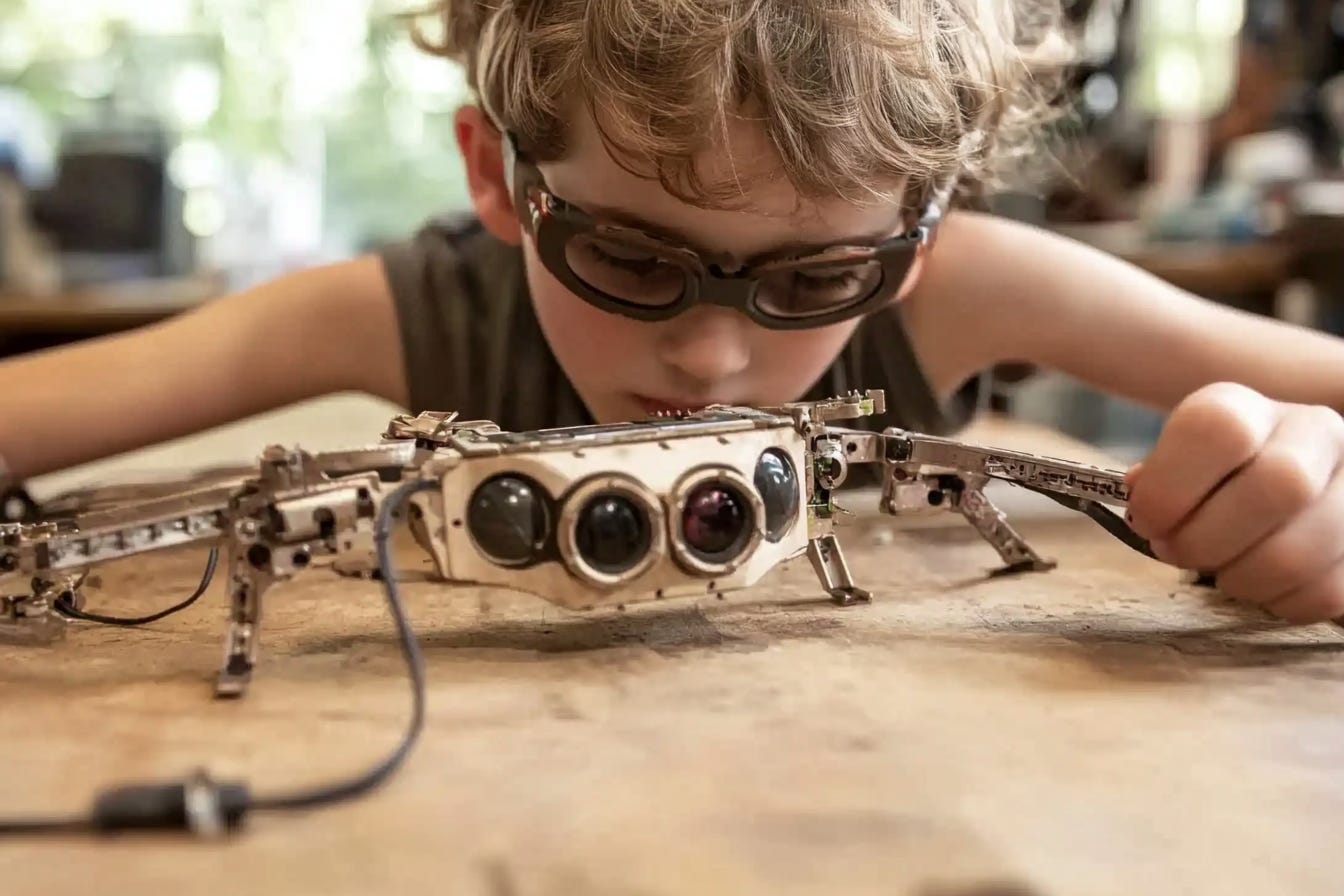
I didn’t set out to create AIs and Shine as a way to explore my twice-exceptional brain, but it’s clear now that my neurocomplexity shaped every aspect of it. From its design to its purpose, the tool reflects my journey: a quest to balance chaos and structure, emotion and logic, individuality and universality. It’s an embodiment of my strengths—creativity, analysis, and empathy through systems—and my challenges, like navigating emotional complexity or staying focused amid a whirlwind of ideas.
Generative AI wasn’t just the tool I needed to create AIs and Shine. It’s the partner my twice-exceptional mind has been looking for—a collaborator that doesn’t judge, tire, or misunderstand. Together, we’re not just building a product. We’re exploring what it means to think, to create, and to understand ourselves in ways that were never possible before.
The Future: Twice-Exceptional Minds and Generative AI
As we move into an era defined by AI, it’s not just technologists or business leaders who will shape its future. It’s people like us—twice-exceptional thinkers, neurocomplex individuals—who will find ways to make it human. Our ability to bridge complexity with creativity, to see frameworks and intuitively reshape them, makes us uniquely suited for this moment.
For me, AIs and Shine is just the beginning. It’s not just a tool but a testament to the partnership between human neurodiversity and machine intelligence. Together, we’re creating a new kind of mirror—one that reflects not just who we are but who we could be.