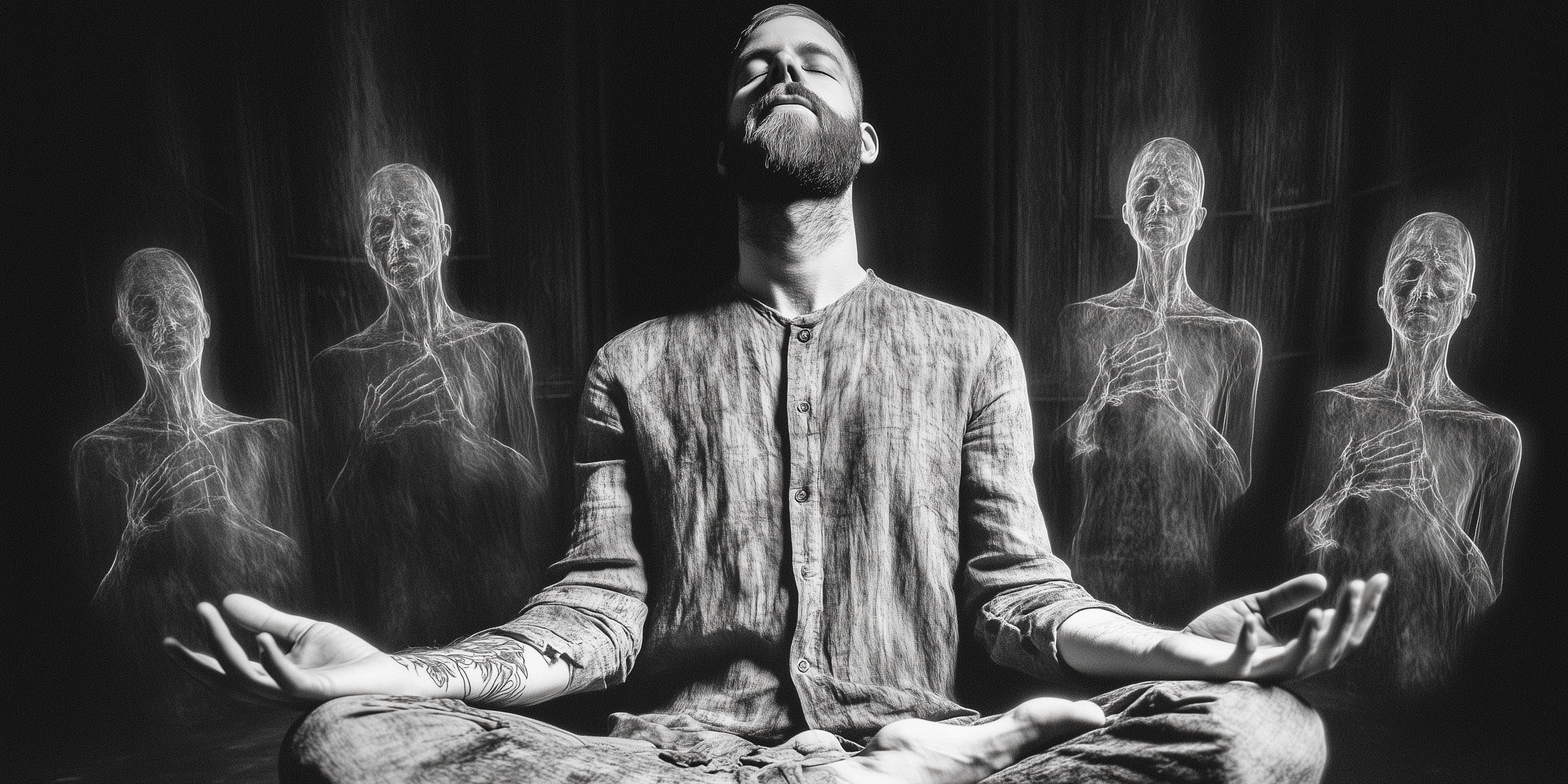
If you told my sixteen-year-old self that I’d one day be a proponent of daily meditation, that version of me would’ve snorted a mouthful of Mountain Dew all over you (most likely at an arcade at 1 AM). You see, back then, "quiet reflection" translated to a few moments of strategic thought before the next wild adventure, or as an element of a greater plan that pushed for achieving the next goal. In short, stillness wasn't on my agenda. And even once I'd gotten the habit down, my chaotic, divergent mind seemed intent on sabotaging every attempt at achieving true inner peace. This wasn't the "easy way" to a more peaceful mindset, or something that felt natural at first.
Fast forward a few years (okay, several years), and meditation has become a cornerstone of my personal growth and resilience. It’s not about escaping my “thought-storms," but instead, about learning how to navigate them with an element of intentional and graceful awareness, an awareness that only I could bring to the situation. But for a mind as wired as mine, it hasn't always been a blissful journey. I’m not the guy who can just clear my mind; my inner world has always felt more like a pinball machine, with thoughts ricocheting and connections firing at rapid speed, all competing for air time. That’s my system and how I see the world: full of connections and ways to find solutions to seemingly random problems, with each thought a piece of the puzzle.
The Struggle is Real
I know many of you likely have also attempted to embrace meditation apps (like Calm or Headspace), with all of their promises of improved focus and reduced anxiety. I did, too, and I kept coming up against that very familiar challenge: my way of operating was not what their systems were designed for. That means for all the beautiful sounds and calming voices, all the prompts designed to clear your mind all led to more overthinking for me, not less. My system seemed to find the loopholes in other people's design, almost making more connections that lead to "solving" the meditation system, instead of following the instructions for a peaceful, calm center.
The challenges I’ve dealt with are likely familiar to others whose minds also prefer to lean into "systems," like some fellow neurodivergents, twice-exceptionals, or even people with different methods of understanding, processing and planning. You might understand, also:
The Idea Overload: The moment I sit quietly, ideas tend to explode like fireworks and start playing hopscotch in my thoughts. “I need to remember that!” “I’ll research that later!” "That connects with THIS!" That level of mental activity was far more distracting than it was focusing, which defeated the whole purpose.
The Need to "Solve" It All: As someone who approaches the world as a set of problems waiting to be solved (it’s a blessing, a curse, and a profession for me), it’s hard for me to surrender to simply being. My analytical brain keeps seeking better meditation results rather than simply practicing with gentle compassion for not achieving “perfect” meditation.
The Resistance to Conformity: Traditional guided meditations are often too prescriptive; I quickly tire of canned scripts that are trying to get me to conform to their system, that they somehow figured out the "right" way. There is an element of autonomy with my self-understanding, as a very key attribute that makes my plan a success.
The Aha Moment (And What It Means For You)
Despite these challenges, I kept with it, I still loved and wanted to explore its power, which began with me leaning into that part of my system that is able to be both analytical and vulnerable with the way I viewed my practices. Eventually, with time, structure and persistence, I finally managed to find some sense of personal regulation with these techniques. I learned:
To center myself after a heated conflict (not necessarily "resolve," but just be in that place of reflection.)
To maintain that equilibrium between external demands and that inner stillness that is such a critical component of self-acceptance.
To approach each meditation practice as a way to further refine my understanding of my system, in all of its complex, dynamic, yet ultimately understandable structure.
And yes, to find quiet. True quiet and acceptance of my brain, not because it has limitations, but because it is.
I know there was tremendous value here for more than just me. Then, in the middle of that realization, that "Aha!" moment happened that tied everything together – meditation and tech, the structure of systems, and the messy beauty of being human – which is where I began to ideate on offering highly-personalized meditations through AIs and Shine, all in the pursuit of those meaningful benefits: that regulated self, that balanced external and internal experience, the authentic heart leading the actions. It was in the struggle that I came up with the real value, that has now changed all my plans.
Meditation, Redefined
What would that personalized meditation look like, though? I wondered. The simple answer, which became my "why," was: I wanted it to have its own understanding of me, my specific needs, challenges, desires, strengths, personality traits and communication methods. I know, through my systems analysis and practices that I was not looking for a new "calm voice" or generic soothing soundscapes. Instead, I was craving my system speaking to me with what I already believed or valued.
With AIs and Shine, I'm not trying to just offer yet another app that offers you what the others already do. Instead, I am looking to provide a bespoke meditation experience unlike any other that:
Understands Your Life Model: Your meditation script is influenced by all that the platform learns from you, through your communication with it. That communication becomes the very "guide" you are trying to tap into, all through a series of meaningful and strategic self explorations via journaling. Your wins, your losses, the places that provide clarity for you, are then integrated with everything else to provide value to you via AI, at any time you feel is necessary.
Addresses Your Specific Needs: Forget generic scripts. These meditations draw from your unique emotional and mental makeup, addressing the challenges and the opportunities that make your personal journey truly your own. If you are also an over-thinker who needs some mental clarity, for example, that will be integrated into the experience.
Meets You Where You Are: Maybe you’re also wrestling with your authentic self like I have been for so long. Maybe, also, like me, you’re struggling with burnout and needing a new strategy for living beyond its heavy limitations. That data also informs the systems. If you are currently stressed or confused, then those points are amplified. If your are content, then the structure celebrates that awareness and keeps your attention on it.
Grows and Learns With You: With continued journaling and introspection with your system, you’ll find that even your meditation structures can be as dynamic and responsive to what you value at the present. In time, as you shift and your understanding changes, so too will the systems that you rely on for greater clarity and self awareness.
It's not just about being more present, it's about being more present with intention.
What Would a Personalized Voice Sound Like?
I’m also diving deep into how we can make it even more personal, with different voices for the “guide”. Consider the options for various personalities and experiences:
The "Mentor" Voice: Grounded, wise, and encouraging, a calm presence that feels both supportive and inspiring. Perhaps it might reflect your own voice as a guide, with your experiences that speak from knowledge that you have, to the same areas in yourself?
The "Fellow Traveler" Voice: Approachable, relatable, and empathetic, conveying that sense of connection and mutual understanding with a person on that same journey. You could tap into those archetypes that helped you along your way – the “Vampire” of balance or that mentor who could see you clearly in order to help navigate those tough areas.
The "Analytical" Voice: A structured, data-driven guide that presents things in an objective, framework-like way, and uses system awareness and patterns to create an understanding of the meditation as part of your greater system. You could tap into that "voice" that has led your life up to this point, but now to use its methodology for growth instead of external needs or validations.
The "Rebel" Voice: This could be one of the more challenging versions of your own personalized guide, tapping into the parts of yourself that refuse to conform and see beauty in the chaos and uncertainty. Maybe this type of structure serves to embrace some discomfort for more authentic growth opportunities, instead of playing it “safe”?
Measuring the Impact
As an entrepreneur who has also been a product manager, I’m all about impact metrics. So while this is going to have a deep, meaningful and personal impact for you, I also need ways to measure its effectiveness over time to improve that user experience. I want hard numbers to demonstrate the validity behind the program. This data might look like the following metrics, and others I haven’t even thought of yet, to further create my "optimal" version for myself:
Self-Reported Stress Levels: Via questionnaires before and after meditation.
Heart Rate Variability: Collected through wearables (like WHOOP) as you go from one activity to another.
Emotional Tracking via Journaling: Monitoring patterns within your day to see emotional awareness levels.
User-Defined Objectives: As users establish their goals, measure their progress over time using specific elements of their personalized system, along with journaling data to identify the changes (both physical and psychological) as these new paths are explored.
Moving Forward (With Intentional Stillness)
AIs and Shine’s personalized meditations are more than just a tech demo; it’s an invitation to start truly listening to ourselves in a meaningful and dynamic way, not in just another version of a system we may not be. The value lies in the intentional exploration that we begin to tap into in that quiet, intentional space, whether that is in our mind, or in our heart, that moves the needle for change in that direction we’ve always wanted to explore, but might not yet have access to without it.
So, tell me, what does a "perfect" meditation sound like to you? How can a customized framework tap into the "real you" with an understanding only you can provide, through a process of reflection and gentle persistence with all that makes you "you?"